

 Call Us
 Contact Us

What to know before a breast lift
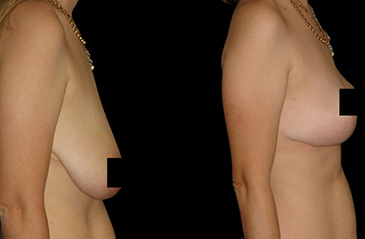
Most patients considering a lift have noticed changes after pregnancy and breastfeeding, after significant weight loss, or after years where the skin has gradually lost elasticity. The procedure addresses drooping and excess skin. It does not, on its own, change breast size. If size is also part of the picture, whether more or less, an implant or a reduction can be performed in the same operation.
The best results come from patients who are close to their long-term weight and have finished having children. Pregnancy and breastfeeding after a lift can stretch the tissue again and undo the correction, and future weight change works against the reshaping.
A lift is not a weight-loss procedure. It removes skin, not fat, and it does not alter breast volume unless combined with something else. It cannot restore the exact fullness of a much younger breast either. What a lift can reliably do is raise the position of the nipple and areola, tighten loose skin, and reshape the breast so it sits higher on the chest wall. If more upper-pole fullness is part of a patient’s goal, an implant is usually needed alongside the lift.
Smoking, an unstable weight, and unmanaged medical conditions all affect suitability and healing. Dr Scamp will assist with specifics during consultation.